
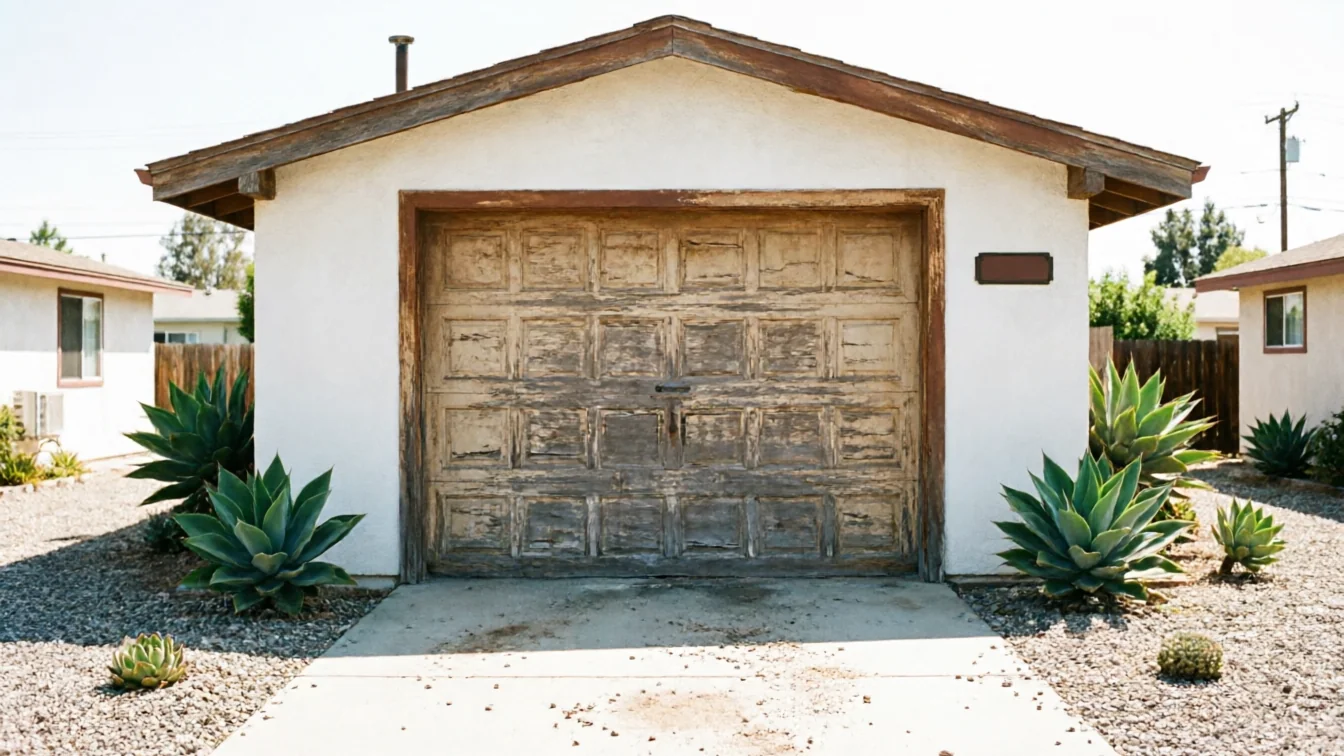
Is Your Older Garage Door Worth Fixing in Chula Vista
A look at when a 1970s-era Chula Vista garage door is worth repairing versus replacing, based on the housing stock and mild coastal climate here.
Read moreWhy garage door torsion springs in Chula Vista fail on the cooler mornings of the year, and what the 1967-1985 housing stock has to do with it.
Local detail
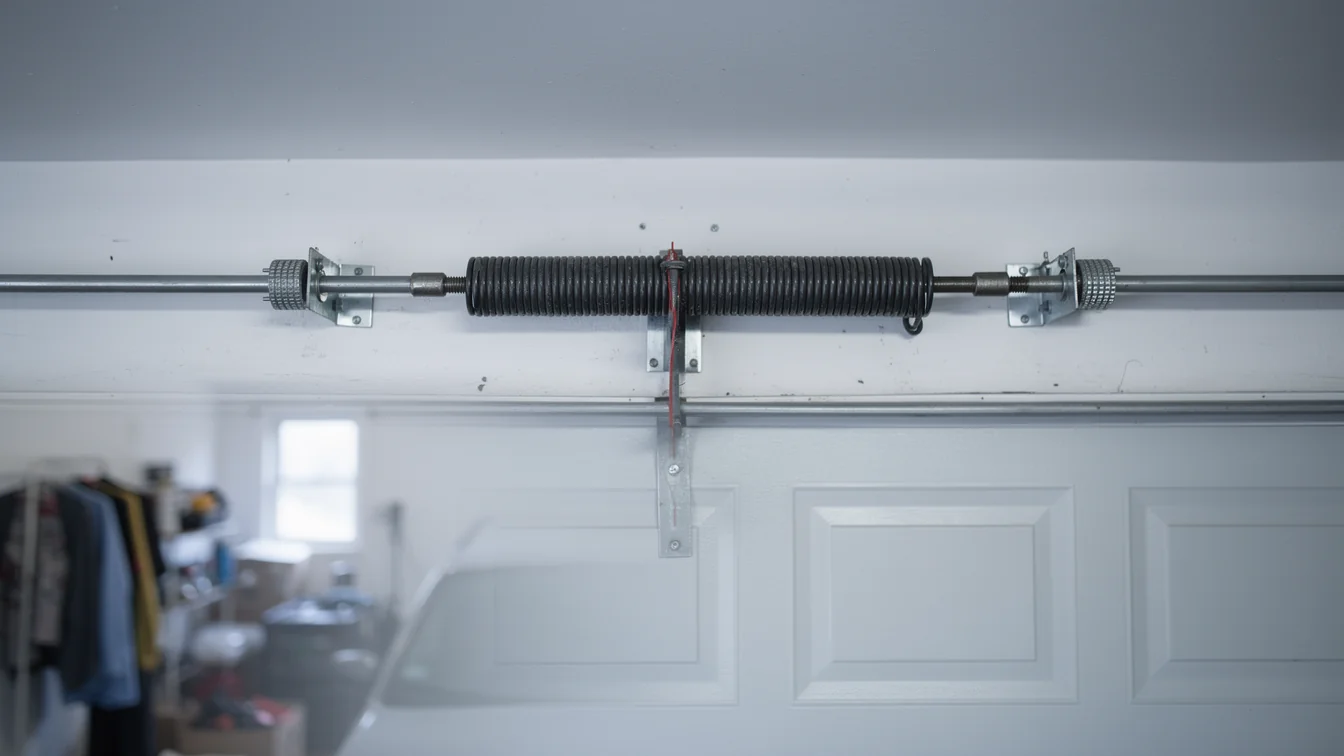
You notice the door is heavier than it used to be. It groans on the way up, maybe stalls a few inches off the floor, and you figure it'll loosen up once the weather warms. In Chula Vista that logic almost works, because we don't get the kind of cold that makes most people think "this is a weather problem." So the door keeps getting heavier through the cooler stretch of the year, and a lot of owners just keep opening it by hand or giving the opener a little push to help it along. That's the holding pattern. It costs nothing today. The spring that's straining under that extra load every time it cycles doesn't care that you're busy, and it doesn't send a warning before it lets go - it just goes, usually first thing in the morning when the steel is at its coldest and stiffest point of the day. Waiting isn't dangerous by itself. Waiting while treating a heavy door as normal is.
The area
A torsion spring stores tension by twisting. Steel gets slightly less flexible as it cools, so the same twist that was fine on a warm afternoon puts more stress on the coil on a cold morning. In most of the country that's a dramatic swing. In Chula Vista, sitting in a mild temperate band, the swing is smaller - a cool night in the 40s after a string of days in the 60s - but it's still a swing, and it still lands hardest on a spring that's already old. A lot of the torsion springs hanging in Chula Vista garages right now were wound sometime between 1967 and 1985, the years when most of this housing went up, and steel that's held tension for that long has already lost some of its temper. It doesn't need a hard freeze to finish the job. It just needs one more cold cycle on a coil that was already near the end.
What we find
The mistake isn't ignoring the door. It's the specific reasoning: "we don't get real cold here, so the cold-weather thing doesn't apply to us." That's backwards. Mild climates don't spare old springs, they just change when the failure shows up - usually on the handful of mornings each winter when the temperature actually dips, rather than during a deep freeze that never comes. Owners who've lived somewhere colder sometimes carry the opposite mistake over: they think a Chula Vista winter is too mild to matter and skip the seasonal check they used to do out of habit elsewhere. Both versions land in the same place, a spring that finally gives out on an otherwise unremarkable cool morning, with the door stuck halfway and a cable or bracket sometimes going with it. The honest limit here: once a torsion spring has snapped, it's not a tightening or a lubrication job. That's a spring replacement, and we're not going to pretend otherwise just to make it sound simpler.
How we work
Across the areas that make up this service territory - Bonita, National City, La Presa, Imperial Beach, Lemon Grove, Coronado, and the rest of the seventeen named communities out to Lakeside and Harbison Canyon - the housing runs the same narrow band of 1960s and '70s construction. That means a lot of original or first-replacement torsion hardware is hitting the same age window at roughly the same time, regardless of which side of Chula Vista it's on. Layer the mild temperate climate on top and you get a predictable pattern rather than a dramatic one: springs don't fail in a big cold snap because there isn't one, they fail in ones and twos on the cooler mornings scattered through the season, on coils that were already near their limit from age. If your door has gotten noticeably heavier since the weather turned, that's not your imagination and it's not nothing - it's a spring telling you it's close.
Questions
Less likely than somewhere with hard freezes, yes, but not immune. The swing from a mild afternoon to a cooler morning is smaller here, but an aging torsion spring from the 1967-1985 housing stock still feels it, and that's often enough to finish off a coil that was already near the end of its life.
Steel stiffens slightly as it cools, which adds stress to a torsion spring already under tension. In Chula Vista's mild temperate band that cooling is modest, but it still lands hardest on the coldest mornings of the season - which is usually when an old spring finally lets go.
Not always, but a door that's gotten steadily heavier, especially through a cooler stretch of weather, points to spring fatigue more often than anything else. We'd want to look at it before you keep opening it by hand, since a fully snapped spring can bring a cable or bracket down with it.
Recommendation
More garage door guides for Chula Vista homeowners.
A look at when a 1970s-era Chula Vista garage door is worth repairing versus replacing, based on the housing stock and mild coastal climate here.
Read more
Most Chula Vista garages date to the 1960s and 70s, so a grinding spring or a popping track means something different here than in newer construction.
Read more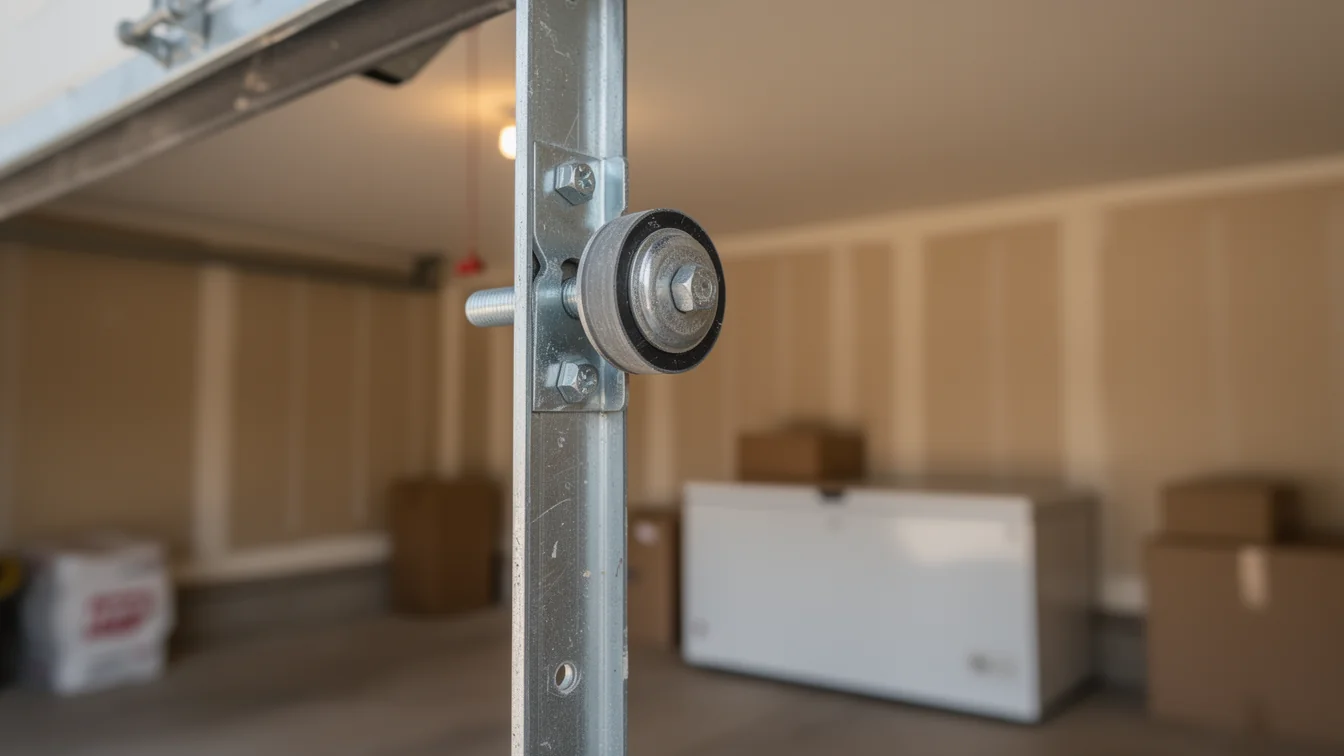
Chula Vista homes built mostly from 1967 to 1985 have original torsion hardware that wears unevenly, and that's why doors drift off track over the years.
Read moreReady when you are
Chula Vista Garage Door Pros repairs and installs garage doors, springs and openers in Chula Vista, CA and the surrounding area.